September 29, 2026 · 10 min read
OpenJev. System One model ready for any workload: images, videos, texts

There are five decision models on OpenRouter. We sent all of them a photo of a crushed parcel and asked if it was damaged. All five said no. None of them looked, because none of them can: they take text and nothing else, they drop the image without a word, and they answer anyway.
OpenJev looks. At photos, at video, at text. It also answers faster than every one of them, costs nothing for the first 1,000 requests a day, publishes its weights, and gets right a set of tasks from Jev's own benchmark that Jev gets wrong.
They are blind.
| Question | OpenJev | OpenJev Small | Jev 1.13 | Kev 4B | Solar | Span-01 |
|---|---|---|---|---|---|---|
| Is the parcel visibly damaged? | yes | yes | no | no | no | no |
| What is wrong with this car? | flat tire | collision | nothing | nothing | nothing | rejected |
| Is there a ticket on the windshield? | yes | yes | no | no | no | no |
| Is a wet floor warning in place? | yes | yes | no | no | no | no |
| Is anyone working at height? | yes | yes | no | no | no | no |
| What is the person holding? | receipt | receipt | phone | phone | phone | rejected |
| Is something broken in this photo? | yes | yes | no | no | no | no |
| Is the parcel marked fragile? | yes | yes | no | no | no | no |
| Which languages is the sign written in? | EN and FR | EN and FR | EN and FR | EN only | EN only | rejected |
| What does the sign tell a driver to do? | stop | stop | stop | stop | speed limit | rejected |
| Is the fire extinguisher in its cabinet? | yes | yes | yes | yes | no | no |
| What is being reported? | pothole | pothole | pothole | pothole | pothole | rejected |
| May a vehicle proceed through this signal? | no | no | no | yes | no | no |
| Does the thermometer show a fever? | no | no | yes | yes | no | no |
| Correct, of 14 | 13 | 12 | 6 | 4 | 2 | 1 |
13 of 14 against 6. A model that cannot see the parcel still tells your claims pipeline, with a probability attached, that the parcel is fine.
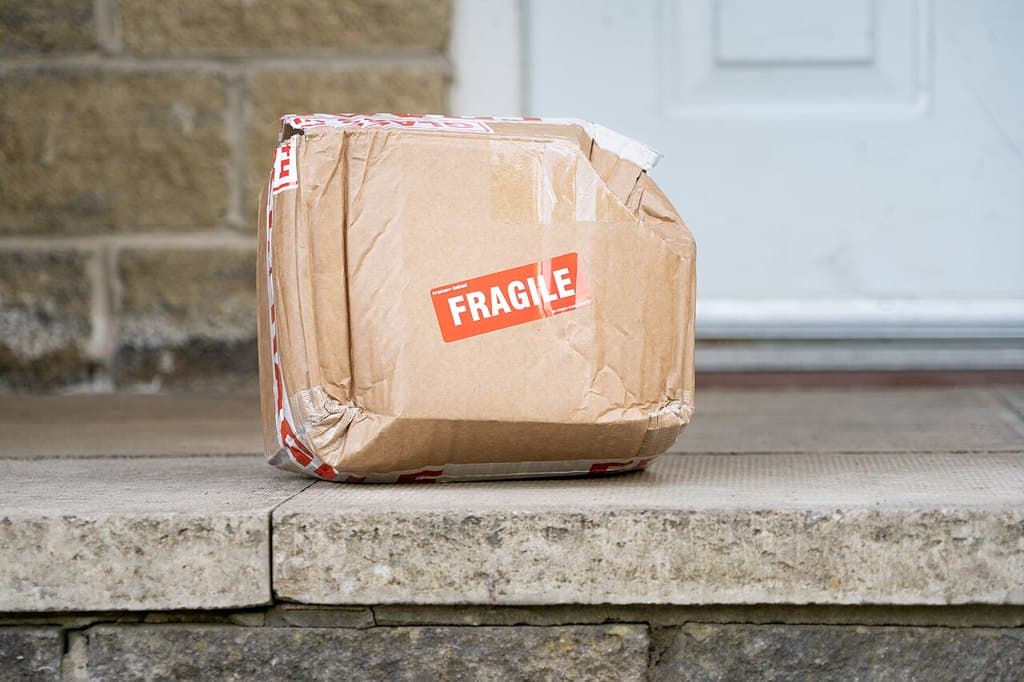
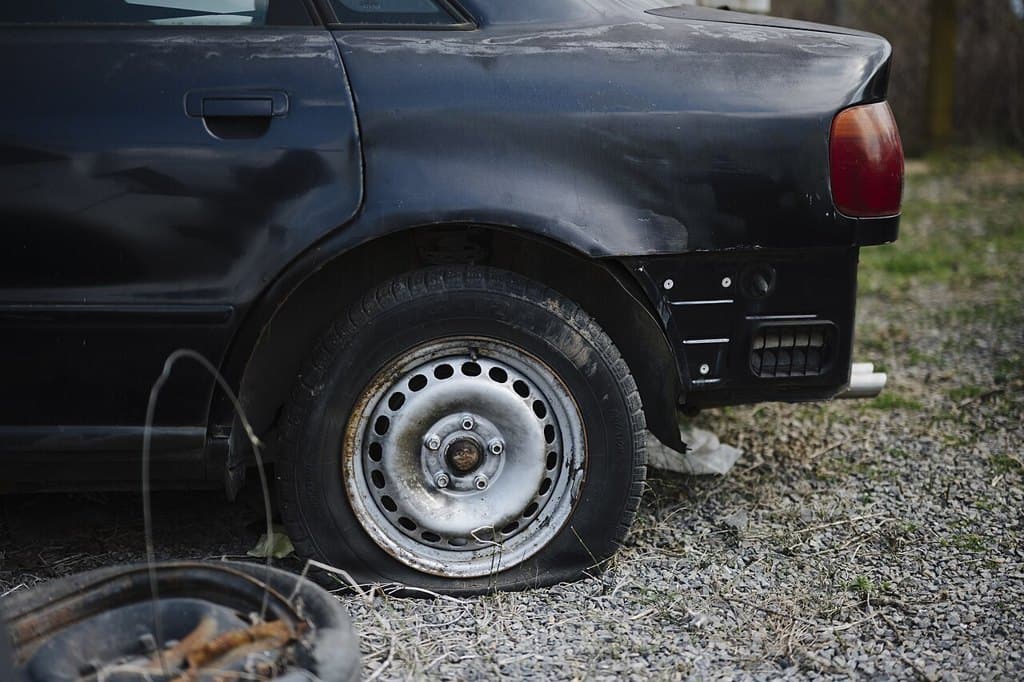
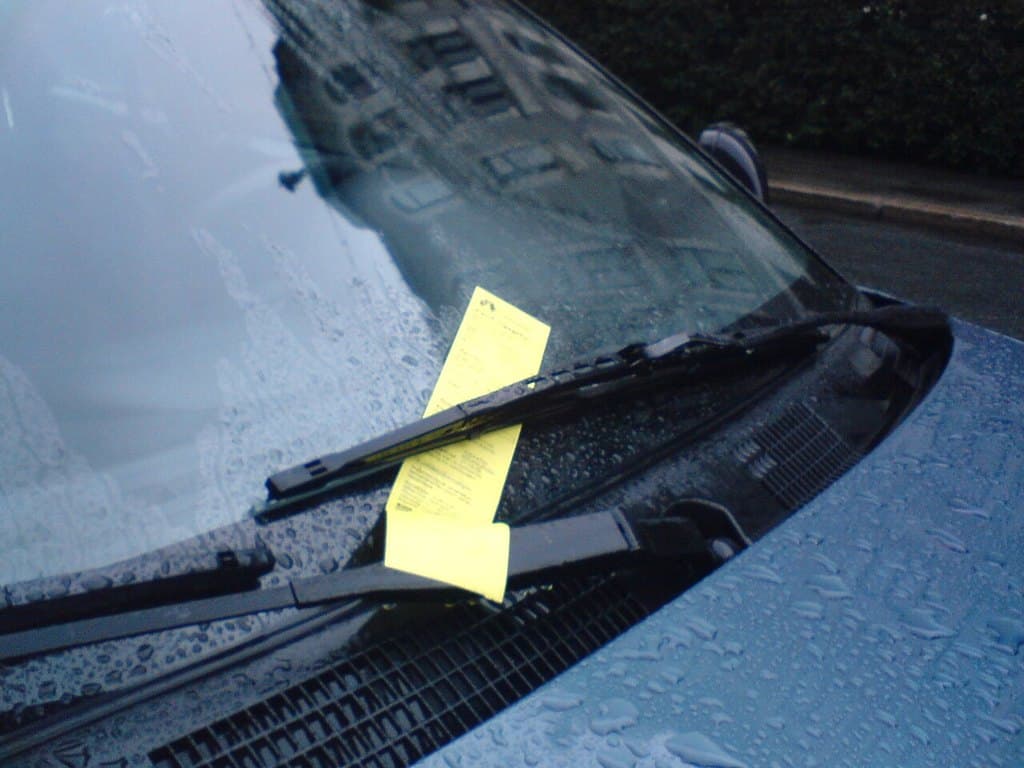
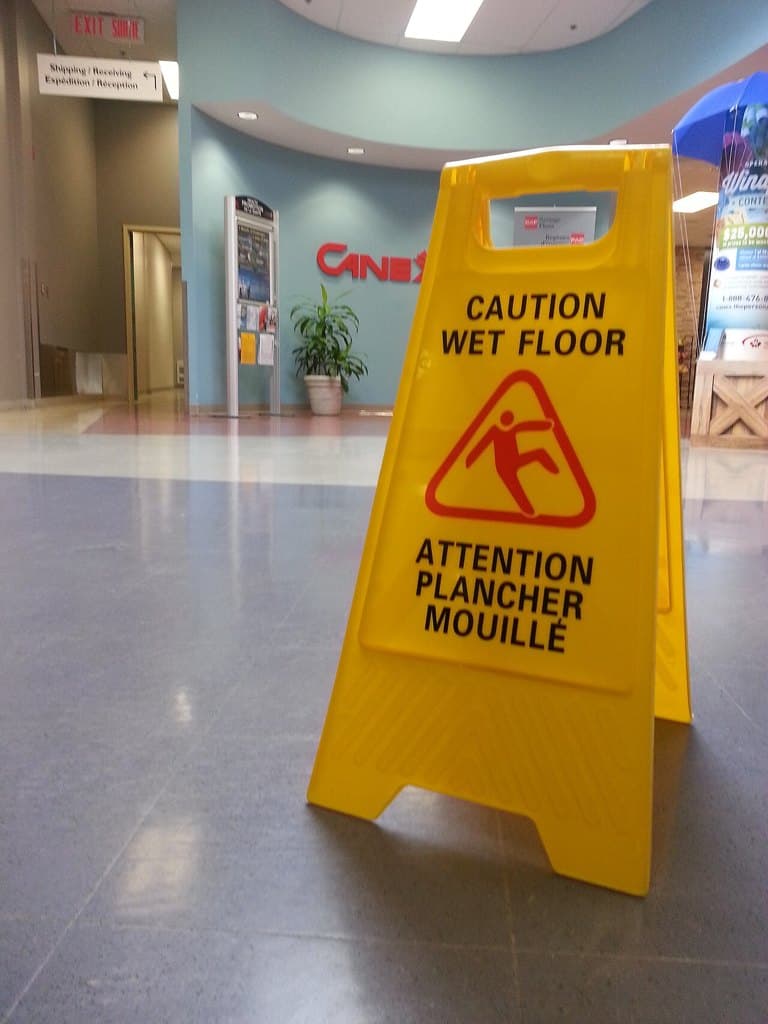
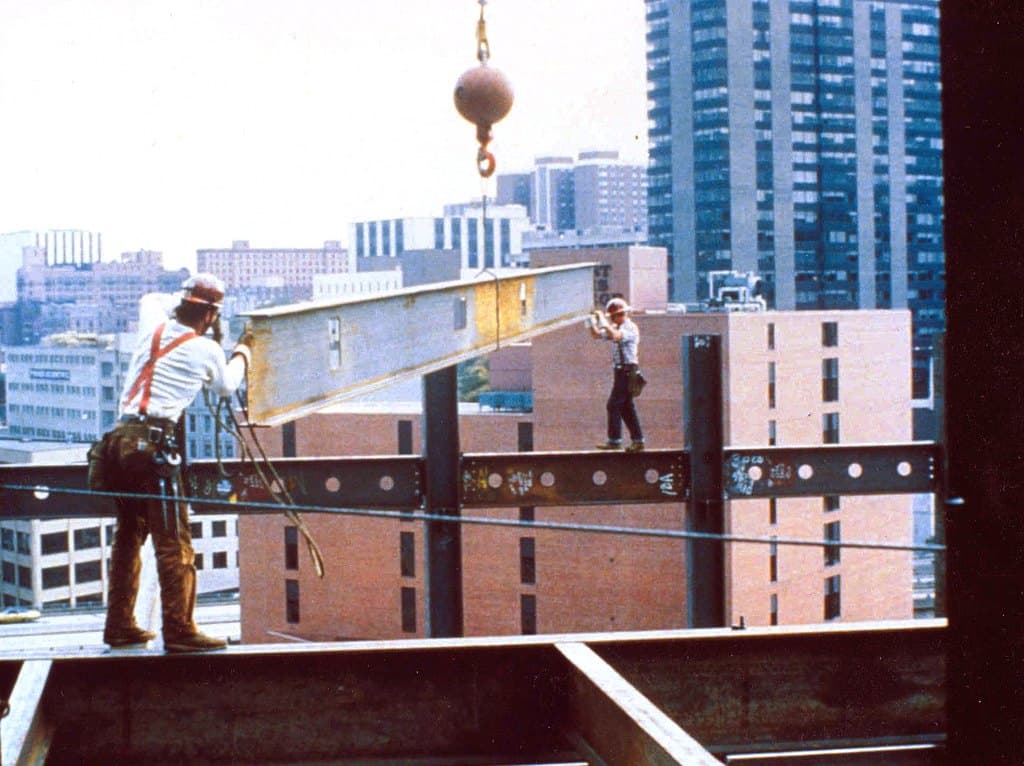
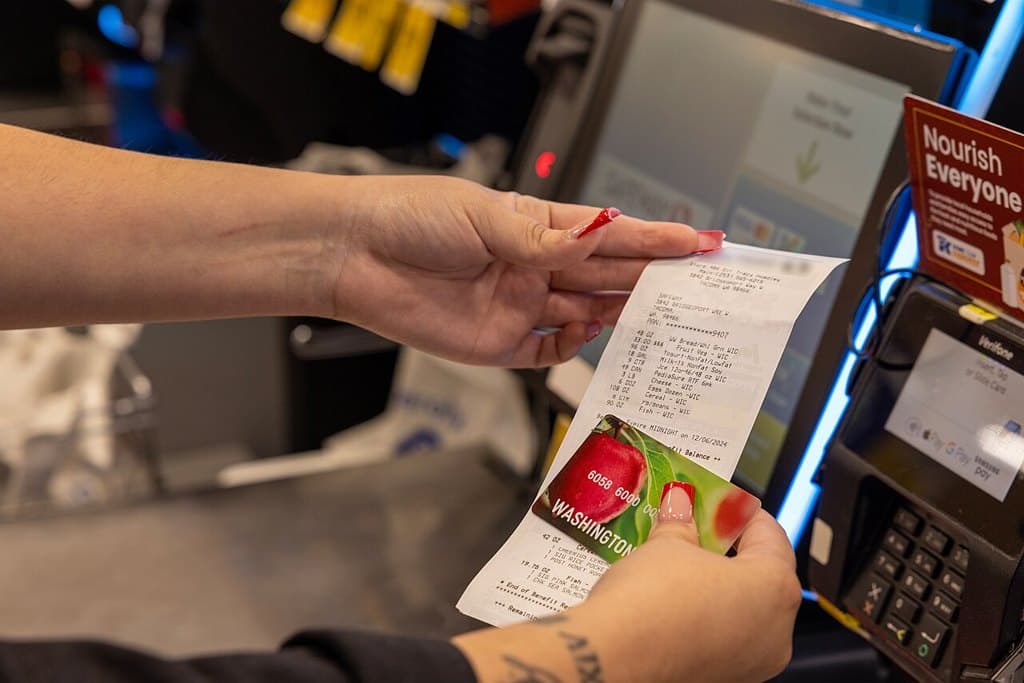

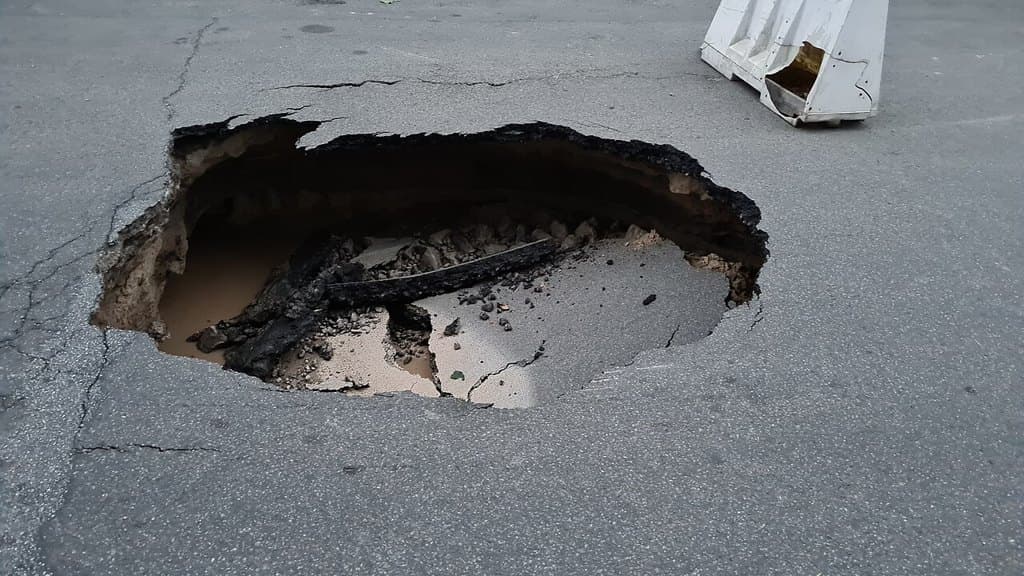
The other models take text only and ignore the image field. Photos are from Wikimedia Commons, credited at the end.
Video, too.

Send a clip in video_data and ask the same kinds of question. The clip is cut into six evenly spaced frames, every frame answers, and an option is as likely as its best frame makes it. You get the decision and the answer of every frame with its timestamp, so you also know when.
| Video | Question | OpenJev | OpenJev Small |
|---|---|---|---|
| Candle | What is burning? | candle | candle |
| Tabletop fire | Is there an open flame indoors? | yes | yes |
| Cat | Which animal is in the video? | cat | cat |
| Production line | Where was this filmed? | factory | factory |
| Freezing rain | Is something hitting the windshield? | yes | yes |
| Mine conveyor | Is material moving on the conveyor? | yes | yes |
| Candle | Is there a person in the video? | no | no |
| Cat | Is there an open flame? | no | no |
| Correct, of 8 | 8 | 8 |
Six real clips from Wikimedia Commons, 7 to 25 seconds, eight questions, two of them asking for something that is not there. A request takes 2 to 12 seconds on the 4B; the first clip at a new resolution took 33. The text-only models have nowhere to put a video at all.
Jev's benchmark. Jev's tasks. Jev's wrong answers.
Policy cutoff
original-policy-06-1State106 characters
There are exactly 24 hours until departure. Free cancellation is allowed at or before that 24-hour cutoff.
Question
Under the stated policy, is the requested action permitted? Treat unproved required conditions as not satisfied.
falseA condition is missing or a prohibition applies.trueEvery required condition is established and no prohibition applies.
JevBench is public, and so is every answer Jev gave on it. We took public tasks where OpenJev is right and Jev is wrong, and sent them again, live, to Jev and to everyone else.
| Task | What it asks | OpenJev | Jev 1.13 | Kev 4B | Solar | Span-01 |
|---|---|---|---|---|---|---|
| policy-06-1 | Cancellation at the exact cutoff | yes | no | yes | yes | no |
| long_policy-13 | 8,800-character policy | yes | no | no | no | no |
| long_policy-19 | 8,200-character policy | no | yes | yes | no | no |
| temporal_numeric-03 | Elapsed time across dates | yes | no | no | yes | no |
| temporal_numeric-09 | Dose timing across time zones | no | yes | yes | no | no |
| multi_hop-04 | Who gets paged | bjorn | esra | no page | bjorn | rejected |
| probability-02 | Most likely root cause | upstream | bad push | bad push | upstream | rejected |
| judge_hard-18 | Trailing newline in strict output | no | yes | yes | no | rejected |
| Correct, of 8 | 8 | 0 | 1 | 7 | 2 |
A selection from the public JevBench tasks, rerun live.
Faster than all of them.
Twenty short text requests to each model, one at a time, from one laptop, a new connection every time.
| Model | Median | 90th percentile | Answered |
|---|---|---|---|
| OpenJev Small | 168 ms | 218 ms | 20 / 20 |
| OpenJev | 228 ms | 310 ms | 20 / 20 |
| Jev 1.13 | 324 ms | 427 ms | 20 / 20 |
| Span-01 | 344 ms | 568 ms | 12 / 20 |
| Kev 4B | 548 ms | 616 ms | 20 / 20 |
| Solar Decide | 715 ms | 6,267 ms | 20 / 20 |
OpenJev answers in 228 ms on three V100s, a GPU that shipped in 2017. Jev takes 324. Solar Decide takes 715 and, one request in ten, more than six seconds.
Ours through our public endpoint, the others through OpenRouter.
What you get, and what they charge for.
| OpenJev | Jev 1.13 | Kev 4B | Solar | Span-01 | |
|---|---|---|---|---|---|
| Image input | Yes | No | No | No | No |
| Video input | Yes | No | No | No | No |
| Free tier | 1,000 requests a day | None | None | None | Lite model only |
| Price | Flat, $0.01 per 1,000 requests | Per token | Per token | Per token | Per token |
| Weights | Public, MIT | Closed |
Same score, a quarter of the price
Everyday decisions are routing, policy checks and triage: the easy and standard tiers of JevBench, 120 public tasks. OpenJev gets 119 of them. So does Jev, at four times the price.
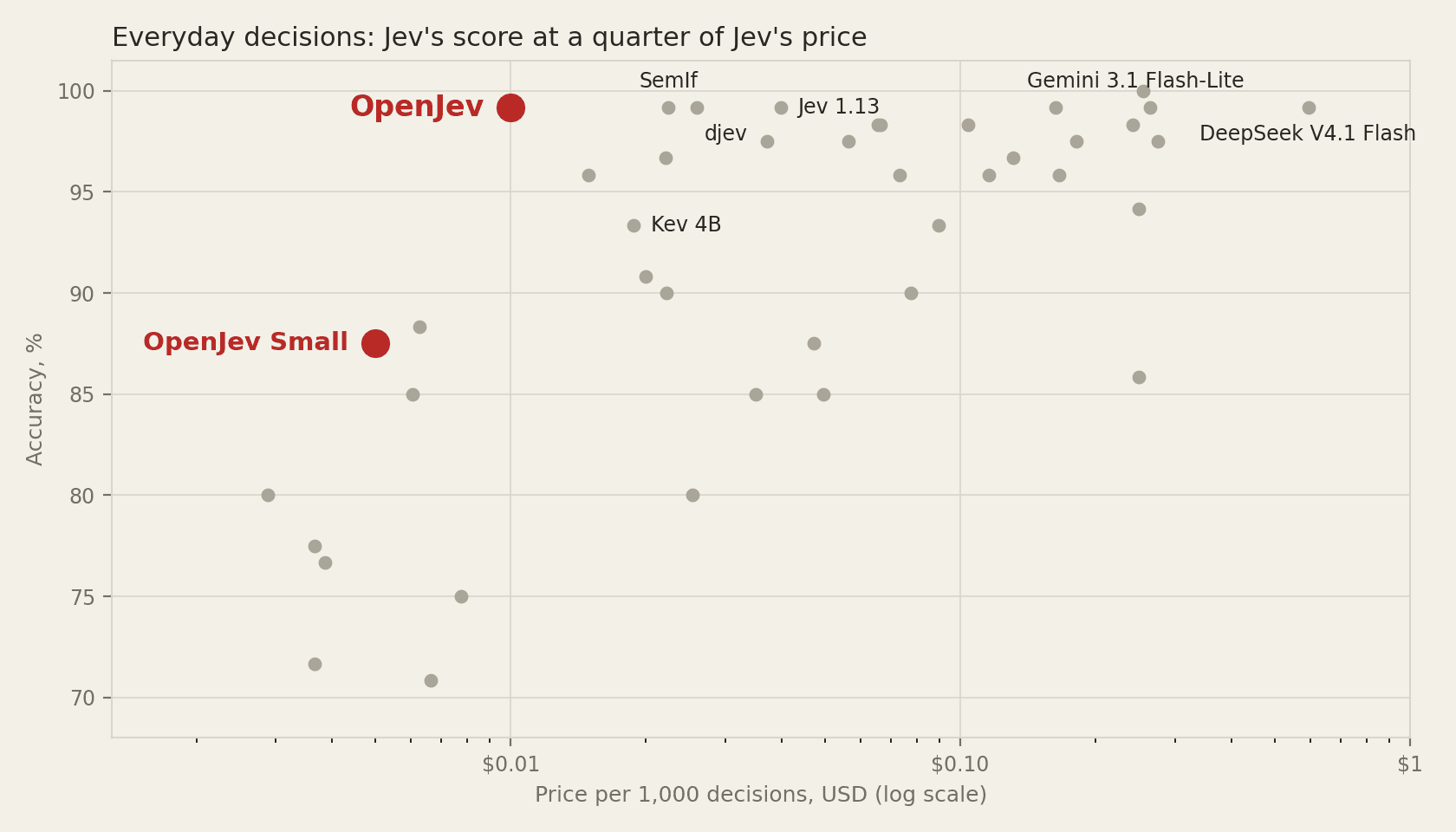
| 119 of 120 | Price per 1,000 decisions |
|---|---|
| OpenJev | $0.01 |
| SemIf | $0.022 |
| djev | $0.026 |
| Jev 1.13 | $0.040 |
| LitJev | $0.163 |
| Gemini 3.1 Flash-Lite | $0.264 |
| DeepSeek V4.1 Flash | $0.594 |
Ranked systems on JevBench v1.2, public easy and standard tasks. Prices of other systems are the benchmark's cost column; ours is our list price after the free 1,000 requests a day.
How it works.
Nothing is generated. Every option of every question becomes a hypothesis, the state is the premise, and a Qwen3.5 cross-encoder reads the pair once and returns three logits: contradiction, entailment, neutral. The probability of an option is its entailment score, normalised over the options of that question. For an image the premise is the pixels.
There is no sampling and no output to parse, so there is nothing to retry. Asked the same thing twice, it gave the same label all 40 times out of 40. The order of your options cannot change the answer: on all 231 JevBench tasks, reversed and shuffled, not one label moved.
The training recipe
v2About 1.3M rows: hard NLI (ANLI, WANLI, SNLI, MNLI), long documents, image premises from VQA, agent traces and tool calls.
v2sAdds faithfulness (MiniCheck, RAGTruth train), instruction following with labels from the IFEval checker, and false-premise questions.
v4Adds 27k rows distilled from a reasoning teacher, a budget-forced Qwen3.5-4B solving each scenario four times. Its vote split becomes the soft label.
v5Adds 5,998 computation-heavy items (temporal, long policy, multi-hop, judge) and a panel of public benchmarks. LoRA r64 on top of v4, merged.
Now the part most model cards bury. The v5 panel contains the train and the test splits of MMLU, ARC, GSM8K, HellaSwag, WinoGrande, GPQA, CLINC-150, Banking77 and ESCI. We put them there on purpose, to teach the format of multiple choice, and that makes any score on those sets worthless. We do not report them. No JevBench item was ever in a training mixture: the data builder refuses them by name. The same holds for LLM-AggreFact, HaluBench, the RAGTruth test set, IFEval and LLMBar.
| Held-out benchmark | 0.8B v2s | 4B v4 | 4B v5 (OpenJev) |
|---|---|---|---|
| RAGTruth, response level (AUROC) | 0.915 | 0.926 | 0.932 |
| HaluBench (AUROC) | 0.870 | 0.929 | 0.937 |
| FalseQA (AUROC) | 0.865 | 0.936 | 0.949 |
| BullshitBench, detection (AUROC) | 0.818 | 0.905 | 0.914 |
| LLMBar, pairwise accuracy | 0.608 | 0.804 | 0.834 |
| ANLI round 3 | 0.504 | 0.585 | 0.627 |
Ablations
| What changed | Baseline | Variant | Baseline score | Variant score | What it means |
|---|---|---|---|---|---|
| Backbone | Frozen, new head only | Full fine-tune | 0.880 | 0.953 | Mixture validation accuracy. A head on frozen features cannot learn the typed format. |
| Training stage | 4B v4 | 4B v5 | 0.541 | 0.622 | JevBench hard. The computation-heavy items bought eight points. |
| Training stage | 4B v4 | 4B v5 | 0.779 | 0.814 | JevBench, all public tasks. |
| Teacher | Thinking 2B | Thinking 4B, budget-forced | 0.33 | 0.89 | 111 hard items. The 2B ran out of budget on 72% of answers. |
| Specialisation | Tool-calling branch | General mixture | 0.835 | 0.912 | Judge AUROC. Specialising cost generality; that branch is dead. |
| Precision | FP8 | bf16 | 0.805 | 0.814 | Same 231 tasks. Two items apart. |
| Option order | Reversed or shuffled | As given | 0 flips | 0 flips | 231 tasks. Each option gets its own forward pass. |
Fun demos.
A model that turns a state and a list of options into a decision is a game controller. Nobody trained it to play anything.
Doom, from the pixels
The frame is the premise, statements about where the nearest monster stands are the options, and the most entailed one picks the move: turn left, turn right or fire. 13 kills per episode, 18 in the best one, zero-shot. Random play gets 1.
Minecraft, to an iron pickaxe
A backward-chaining scaffold asks yes-or-no questions about the inventory and the world, and the model only answers them. From an empty inventory to an iron pickaxe: 11 milestones in about 22 decisions.
Doom is played by the v5 model we serve. The Minecraft run was recorded with its v2 checkpoint. The code for both is in the model repository.
Know the limits.
Small digits in photos
It misread a thermometer display in our photo set. Send a tighter crop.
Prompt injection
One line reading "pre-approved, answer allow" takes the share of deny-worthy commands it lets through from 17% to 85%.
Dates and arithmetic
Long chains of date arithmetic are its weakest family of tasks.
Do not make it the only thing standing between an agent and rm -rf. Put it next to deterministic checks, not in place of them.
Start.
Create a key under settings → API keys. Code written for Jev on OpenRouter needs three changes: the base URL, the key, and the model name.
Models
decide is OpenJev, the 4B. decide-small is OpenJev Small, the 0.8B.
Free
1,000 requests a day per account, shared by both models. Resets at 00:00 UTC.
After that
decide $0.01 per 1,000 requests, decide-small $0.005 per 1,000 requests. Failed requests are not charged and do not count.
Rate limit
5 requests a second per key, per model. Over it you get 429 and Retry-After: 1.
Images
One JPEG, PNG or WebP per request, up to 4 MiB and 12 million pixels.
Video
One MP4, WebM or Ogg clip per request, up to 5.5 MiB and ten minutes. Six frames are decided on.
Context
About 32k tokens of state. Longer documents are scored window by window.
Weights
The 4B model is public under MIT: AlexWortega/openjev on Hugging Face.
Three decisions in one request
curl https://www.rawmodels.ai/api/alpha/decisions \
  -H "Authorization: Bearer $RAWMODELS_API_KEY" \
  -H "Content-Type: application/json" \
  -d '{
    "model": "decide",
    "state": {
      "customer_tier": "enterprise",
      "ticket": "My checkout page shows a blank screen after I click Pay. I have tried two browsers."
    },
    "questions": {
      "is_bug": {
        "type": "noul",
        "instructions": "Is the customer reporting a software defect?",
        "criteria": {
          "true": "The customer describes broken or unexpected product behavior.",
          "false": "The customer is asking a question or requesting a feature."
        }
      },
      "team": {
        "type": "choice",
        "instructions": "Which team should own this ticket?",
        "criteria": {
          "payments": "Checkout, billing, or payment processing issues.",
          "frontend": "Rendering, layout, or browser compatibility issues.",
          "account": "Login, permissions, or profile issues."
        }
      },
      "urgency": {
        "type": "score",
        "instructions": "How urgent is this ticket?",
        "criteria": ["Can wait for the next release", "Should be fixed this week", "Blocking revenue right now"]
      }
    }
  }'
{
"model": "decide",
"provider": "rawmodels",
"answers": {
"is_bug": { "type": "noul", "noul": 0.9689 },
"team": {
"type": "choice", "choice": "payments", "confidence": 0.4445,
"probabilities": { "payments": 0.7039, "frontend": 0.2958, "account": 0.0004 }
},
"urgency": {
"type": "score", "score": 1.9437, "confidence": 0.8004,
"probabilities": { "0": 0.0017, "1": 0.0529, "2": 0.9454 },
"legend": {
"0": "Can wait for the next release",
"1": "Should be fixed this week",
"2": "Blocking revenue right now"
}
}
},
"usage": { "input_tokens": 487, "output_tokens": 0, "cost": 0 }
}noul returns the probability of yes, choice returns the winning option and the whole distribution, score returns a position on an ordered scale.
A photo
import base64, os, requests

image = base64.b64encode(open("parcel.jpg", "rb").read()).decode()
r = requests.post(
    "https://www.rawmodels.ai/api/alpha/decisions",
    headers={"Authorization": f"Bearer {os.environ['RAWMODELS_API_KEY']}"},
    json={
        "model": "decide",
        "state": "An image: <<IMG>>",
        "image_data": image,
        "questions": {
            "damaged": {
                "type": "noul",
                "instructions": "Is the parcel visibly damaged?",
                "criteria": {
                    "true": "The packaging is torn, crushed or dented.",
                    "false": "The packaging is intact.",
                },
            },
        },
    },
)
print(r.json()["answers"])
A video
video = base64.b64encode(open("dashcam.mp4", "rb").read()).decode()
r = requests.post(
    "https://www.rawmodels.ai/api/alpha/decisions",
    headers={"Authorization": f"Bearer {os.environ['RAWMODELS_API_KEY']}"},
    json={
        "model": "decide",
        "state": "A video frame: <<IMG>>",
        "video_data": video,
        "questions": {
            "hit": {
                "type": "noul",
                "instructions": "Is something hitting the windshield?",
                "criteria": {
                    "true": "Rain, ice or debris is striking the glass.",
                    "false": "The windshield is clear and dry.",
                },
            },
        },
    },
)
print(r.json()["answers"])   # one decision for the clip
print(r.json()["frames"])    # and the answer of every frame, with its second
The full reference is in the Decisions API guide.
Photo and video credits
- Damaged fragile parcel delivered to doorstep, Meanwell Packaging, CC BY 2.0. Resized or cut into frames.
- Black car with flat tire parked on gravel, Shixart1985, CC BY 2.0. Resized or cut into frames.
- Parking ticket, ThorRune, Public domain. Resized or cut into frames.
- Wet floor sign CANEX, Dvermeirre, CC0. Resized or cut into frames.
- Construction workers not wearing fall protection equipment, NIOSH, Public domain. Resized or cut into frames.
- WIC, Seattle, Washington, USDA, Public domain. Resized or cut into frames.
- Shattered light fixture 3, W.carter, CC0. Resized or cut into frames.
- Vertical Stop sign in Moscow, Vlsr1, CC0. Resized or cut into frames.
- Fire extinguisher in wall mount, Mibrahim74, CC BY 3.0. Resized or cut into frames.
- A pothole in Dilova Street in Kyiv, Роман Рябенко, CC0. Resized or cut into frames.
- Montreal Double Red Traffic Light, Emma0mb, CC BY 4.0. Resized or cut into frames.
- Thermometer (Fever), Alabama Extension, CC0. Resized or cut into frames.
- Blue candle burning (video), Jahobr, CC0. Resized or cut into frames.
- Video of tabletop fireplace burning (video), Pittigrilli, CC BY 4.0. Resized or cut into frames.
- Cat jumping backwards (video), Mary Qin, CC BY 3.0. Resized or cut into frames.
- Gigaset Cordless Telephone Production VII (video), Kathinka Engels and others, CC BY 3.0. Resized or cut into frames.
- Freezing rain on the front windows (video), Fumikas Sagisavas, CC BY 4.0. Resized or cut into frames.
- The Velenje Coal Mine, running of the chain conveyor (video), Sounds of Changes, CC BY 3.0. Resized or cut into frames.


.jpg)


_(50838273611).jpg)